
In the realm of high-end travel, true luxury is no longer defined solely by thread counts or Michelin stars—though Peru certainly offers both in abundance. Today, the ultimate luxury is access. It is the privilege of standing in a pristine cloud forest where few have trodden, of witnessing evolutionary marvels that exist nowhere else on Earth, and of connecting with nature in its most theatrical form.
Peru is the global stage for this theater. It is a country where geography has conspired to create a masterpiece of biodiversity. For the discerning traveler, the primary allure lies in the sky. Peruvian birds are not merely fauna; they are living jewels, winged guardians of ancient citadels, and the vibrant soul of the landscape. With a diversity that rivals any destination on the planet, the avian residents of this South American nation offer a spectacle of color and grace that transforms a mere vacation into a transcendent expedition.
This guide invites you to explore the seven most iconic winged wonders of the Inca Empire. We will traverse from the arid luxury of the coast to the opulent greenery of the Amazon, discovering why Peruvian birds are the crowning glory of any bespoke South American itinerary.
The Art of Avian Exploration in Peru
To understand the prestige of birding in Peru, one must appreciate the topography. The Andes do not just divide the country; they sculpt it. They create isolated pockets of life—micro-climates where evolution has painted with a unique palette. For the connoisseur of nature, this means that Peruvian birds offer an endless array of rarities.
From the private terraces of the Sacred Valley to the exclusive river suites of Amazonian cruisers, the observation of these species can be done in absolute comfort. There is no need for hardship to witness the wild. In Peru, conservation and comfort walk hand in hand.
Why Peruvian Birds define the Elite Travel Experience
When you commission a private guide to seek out the Marvelous Spatuletail or the Andean Condor, you are engaging in a tradition of naturalism that dates back to the Victorian explorers, but with modern elegance. You are supporting the preservation of delicate ecosystems. The quest to see Peruvian birds is an investment in the planet’s heritage.
1. The Andean Condor: Monarch of the Canyon
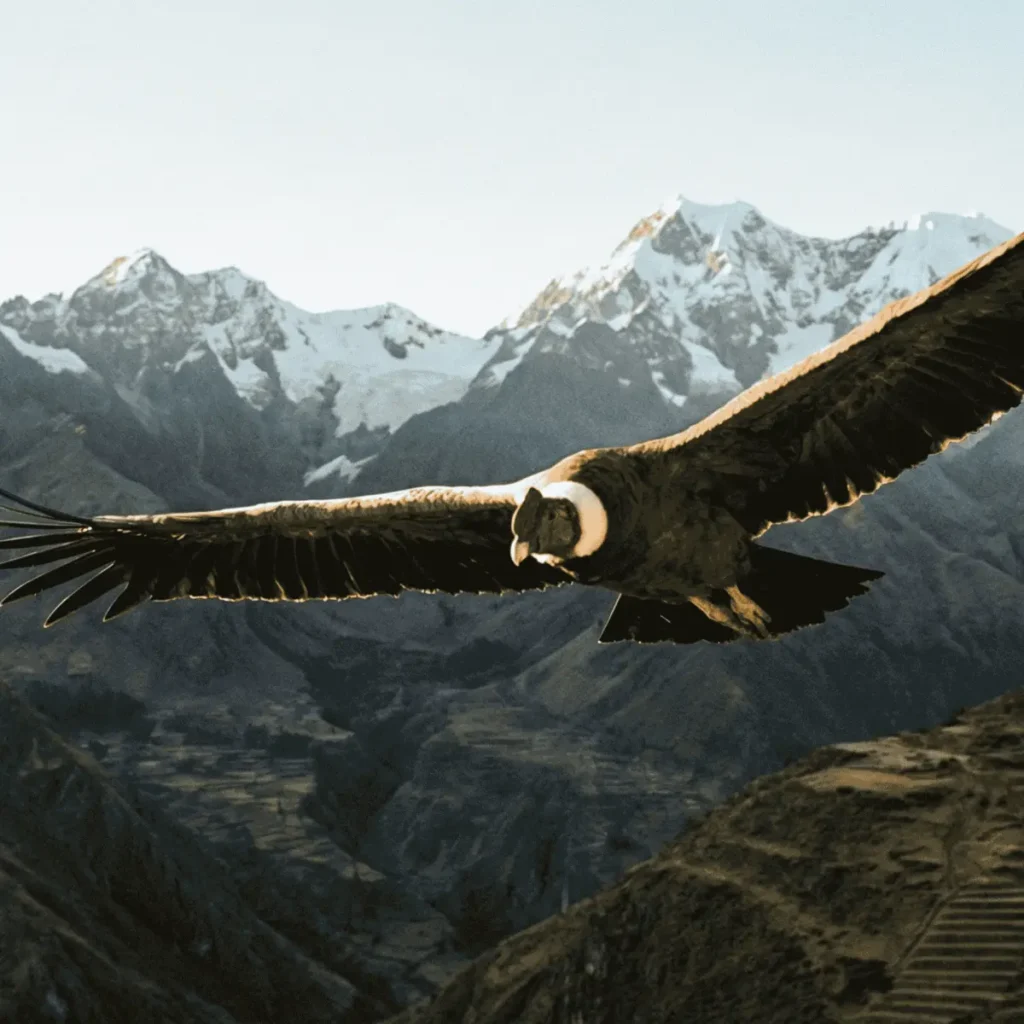
There is perhaps no image more evocative of the Andes than the silhouette of a massive creature gliding effortlessly against a backdrop of snow-capped peaks. The Andean Condor (Vultur gryphus) is the undisputed king of the skies and a central figure in Andean cosmology.
A Private Audience with the King
While the crowds flock to public viewing decks, the luxury traveler experiences the Condor differently. Imagine a private breakfast set up on the edge of the Colca Canyon or the Apurímac, far from the bustle. Here, in the stillness of the high altitude, the Condor rises on the morning thermals.
These Peruvian birds possess a wingspan that commands respect, often exceeding ten feet. They do not flap frantically; they dominate the air currents with the poise of a seasoned monarch. Watching a Condor ascend from the depths of a canyon is a meditative experience, a reminder of the sheer scale of the Andes.
The Ecological Aristocracy
The Condor plays a vital role as the cleaner of the mountains. It is a creature of immense dignity, revered by the Incas as the messenger to the gods. Today, exclusive conservation programs allow guests at high-end lodges to learn about the biology of these Peruvian birds, contributing to efforts that ensure their flight continues for generations.
2. The Andean Cock-of-the-rock: The Crimson Performer
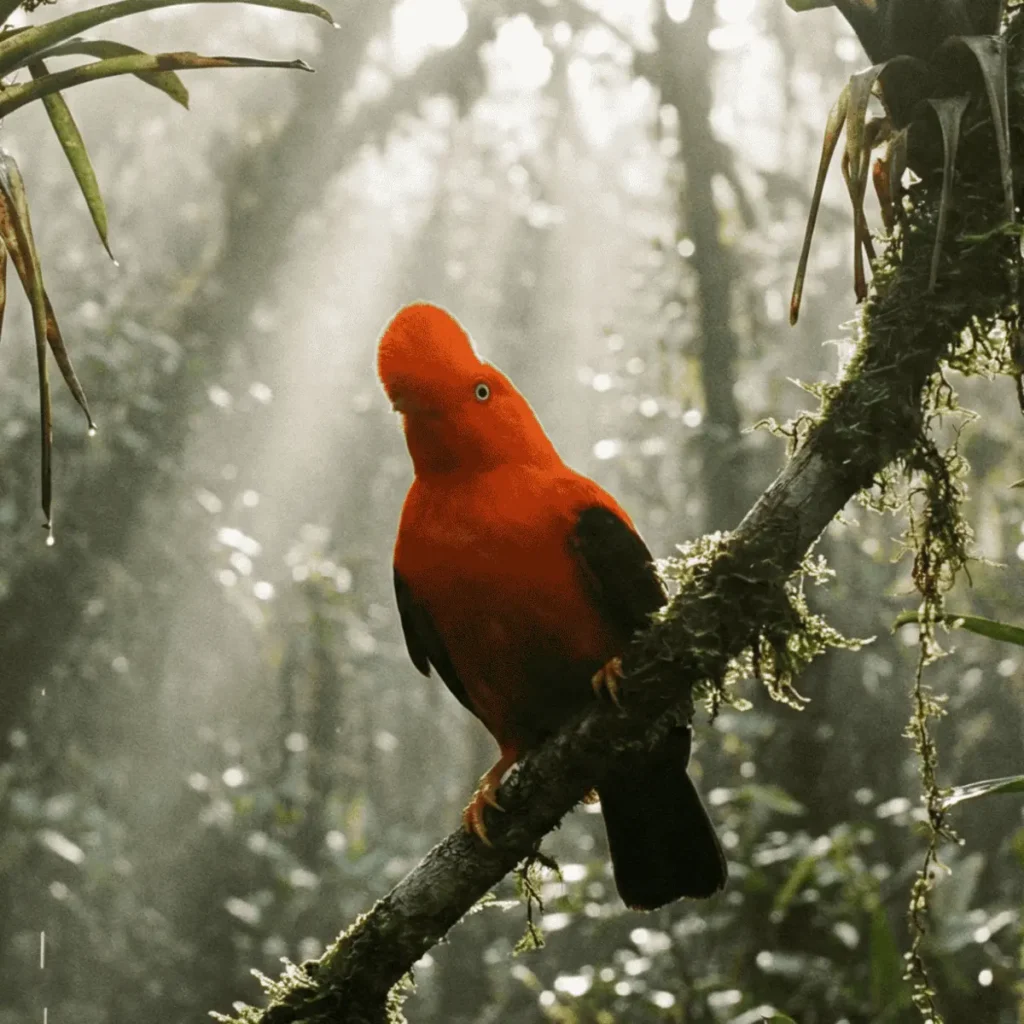
If the Condor is the stoic king, the Andean Cock-of-the-rock (Rupicola peruvianus) is the flamboyant artist. Recognized as the national bird, this species inhabits the cloud forest—a magical, mist-shrouded ecosystem that bridges the Andes and the Amazon.
The Spectacle of the Lek
For the elite birder, the “lek” is the ultimate destination. This is the stage where males congregate to perform their courtship dance. But this is not just any display; it is an explosion of neon orange and scarlet. The males bob, bow, and call with an intensity that is mesmerizing to behold.
Staying at a luxury eco-lodge in the cloud forest—such as those found near Machu Picchu or in the Manu biosphere—provides front-row seats to this performance. Surrounded by orchids and tree ferns, you witness one of the most vibrant Peruvian birds in its natural amphitheater.
A Symphony of Color and Sound
The Cock-of-the-rock is a creature of deep contrasts. The brilliant plumage of the male stands out starkly against the deep greens of the jungle. Their presence indicates a healthy forest, as they are key seed dispersers. To see them is to see the forest’s heart beating. Among all Peruvian birds, they are the most charismatic ambassadors of the high jungle.
3. The Marvelous Spatuletail: A Rarity Beyond Compare
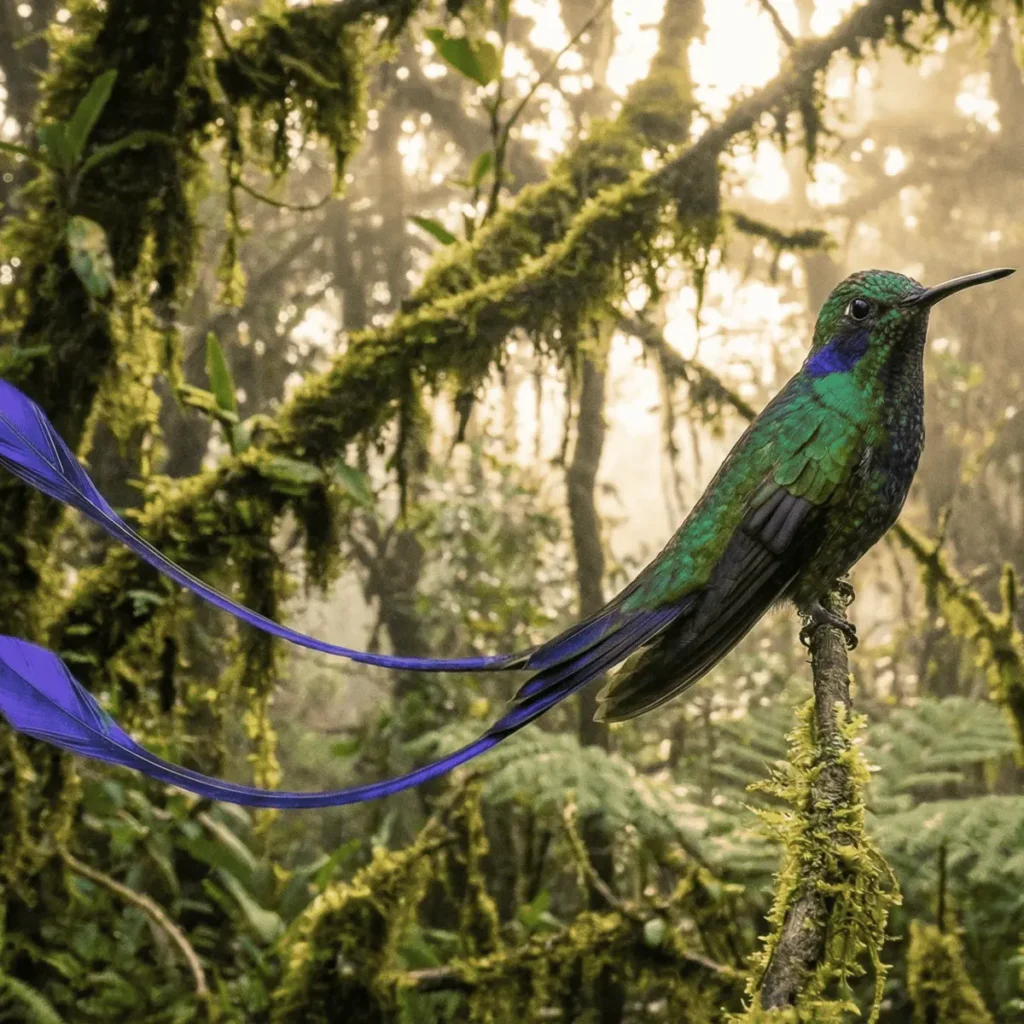
True luxury is rarity. In the world of ornithology, few creatures are as rare or as physically impossible as the Marvelous Spatuletail (Loddigesia mirabilis). Endemic to a small region in northern Peru, this hummingbird is the Holy Grail for collectors of visual memories.
The Ballet of the Hummingbird
What sets this bird apart is its tail. The male possesses two long, wire-like feathers that end in violet-blue discs (spatules). He can move these independently, waving them in a hypnotic dance to court females. It is a feat of evolutionary engineering that seems to defy physics.
Accessing the habitat of the Spatuletail often involves a journey to the Utcubamba Valley. Here, bespoke lodges offer access to private reserves. It is an intimate encounter. These tiny Peruvian birds hover mere inches away, their iridescent gorgets flashing like emeralds and amethysts in the sun.
Exclusive Conservation
Because this bird exists nowhere else, visiting it is an act of philanthropy. High-end tourism provides the funds to purchase land and plant the specific flora these birds require. When you photograph a Marvelous Spatuletail, you are directly funding the survival of one of the most exquisite Peruvian birds in existence.
4. Macaws: The Rainbows of the Amazon
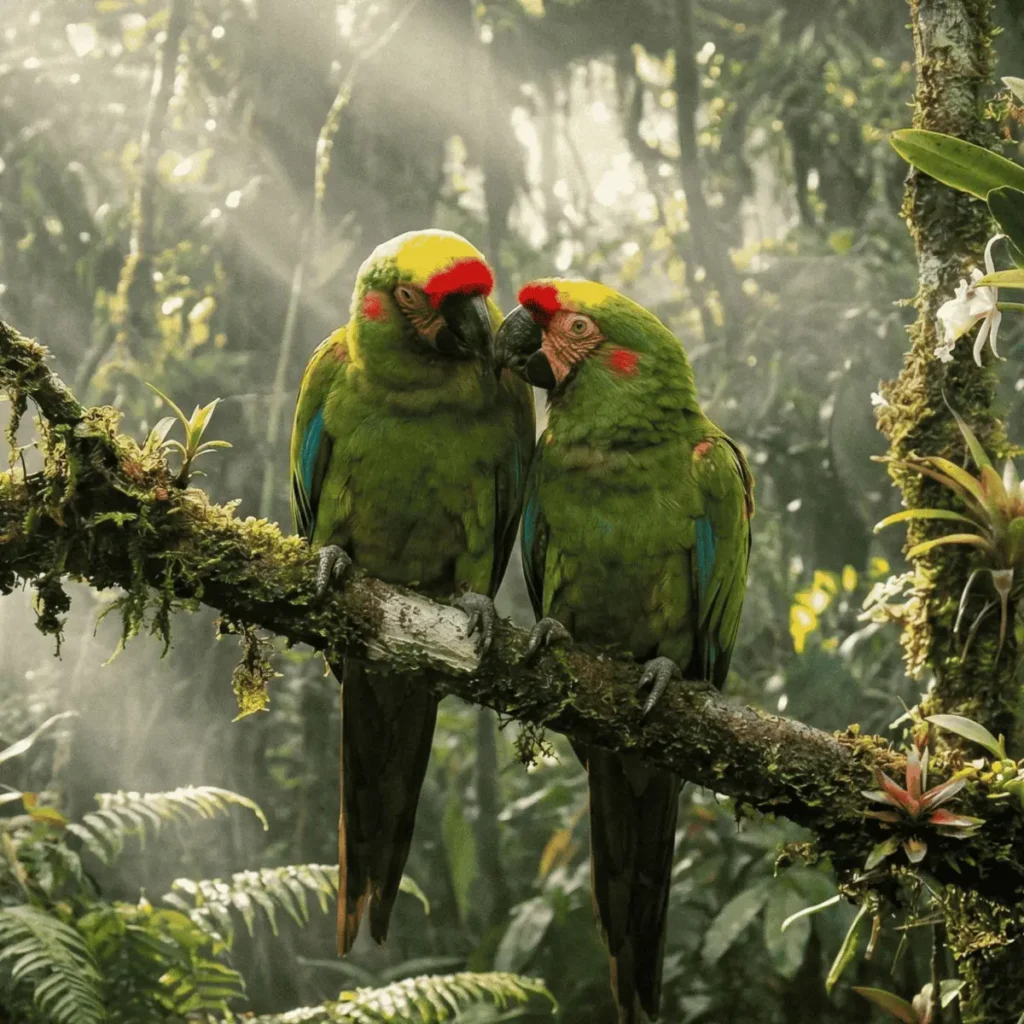
Descending into the Amazon basin, the palette shifts from the subtle tones of the mountains to the riotous primary colors of the rainforest. The great Macaws—Scarlet, Red-and-Green, and Blue-and-Yellow—are the icons of this verdant world.
The River Cruise Perspective
The most sophisticated way to witness the Amazon is aboard a luxury river vessel. Drifting down the Amazon or its tributaries, you are in a moving five-star hotel. From the privacy of your suite’s balcony, you can watch pairs of Macaws flying overhead, their long tails streaming behind them like ribbons.
The “colpa,” or clay lick, is the highlight. In exclusive reserves like Tambopata, guests can visit secluded blinds. As the sun rises, the air fills with the raucous calls of hundreds of parrots and macaws descending to eat the mineral-rich clay. It is a sensory overload, a chaotic masterpiece of nature that defines the experience of watching Peruvian birds.
Intelligence and Romance
Macaws are deeply intelligent and famously monogamous. Seeing a pair interact—preening each other and flying wingtip to wingtip—adds an emotional resonance to the sighting. They are the socialites of the jungle, loud, beautiful, and impossible to ignore. They represent the untamed spirit of the tropics, a crucial entry in any catalog of Peruvian birds.
5. The Andean Flamingo: High-Altitude Elegance
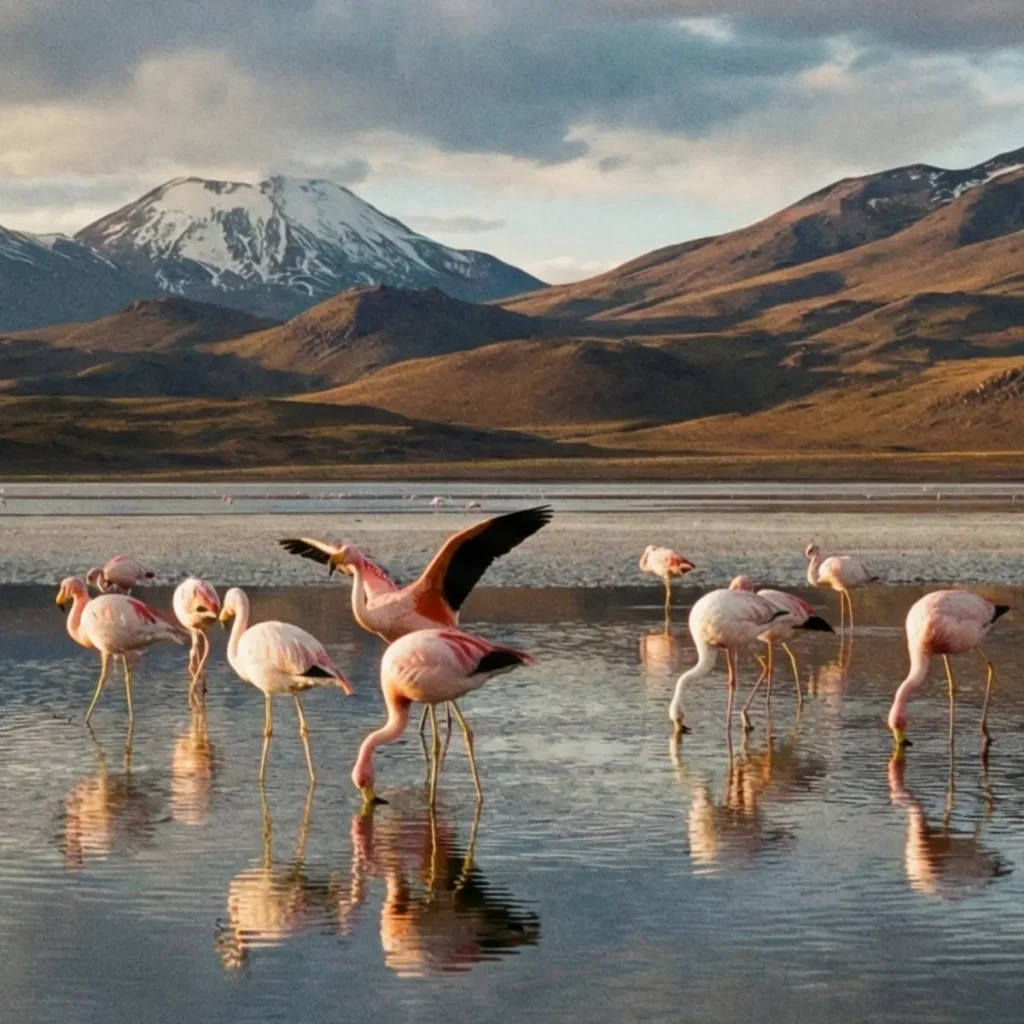
Flamingos are often associated with tropical heat, but the Andean Flamingo (Phoenicoparrus andinus) is a creature of the thin, cold air of the Altiplano. They inhabit the saline lagoons found at 12,000 feet and above, amidst a landscape that looks extraterrestrial.
The Pink Mirrors of the Andes
Imagine a vast, mirror-like lake reflecting a snow-capped volcano. Now, populate that lake with thousands of pink silhouettes. This is the domain of the Andean Flamingo. For the luxury traveler crossing the high plains aboard the Belmond Andean Explorer train, these Peruvian birds appear as flashes of coral against the golden ichu grass.
Resilience in Style
The Andean Flamingo is the rarest of all flamingo species. Their ability to thrive in such harsh conditions is a testament to nature’s adaptability. Their delicate pink coloration comes from the specialized algae they consume. Viewing them requires venturing into the dramatic heights of Peru, often involving private drivers and gourmet picnics beside lagoons that feel like the edge of the world. Among Peruvian birds, they are the stylish survivors of the heights.
6. The Torrent Duck: Master of the Whitewater

For those who seek the thrill of the rushing river, the Torrent Duck (Merganetta armata) is a fascinating study in hydrodynamics. These birds do not float idly; they conquer the rapids.
The Riverside Villa Companion
The Torrent Duck is often spotted in the Urubamba River, which winds through the Sacred Valley. Guests staying at the riverside villas of the valley’s premier hotels need only look out their window to spot them. These Peruvian birds are distinct, with striking black and white patterns on the males and rust-red tones on the females.
Defying the Current
It is mesmerizing to watch a Torrent Duck dive into foaming water that would sweep a human away, only to emerge upstream, perched on a slippery rock. They are indicators of pristine water quality. Their presence signals a healthy ecosystem, adding a layer of environmental reassurance to your luxury retreat. They are the unsung heroes among Peruvian birds, representing strength and persistence.
7. The Burrowing Owl: The Desert Sentinel
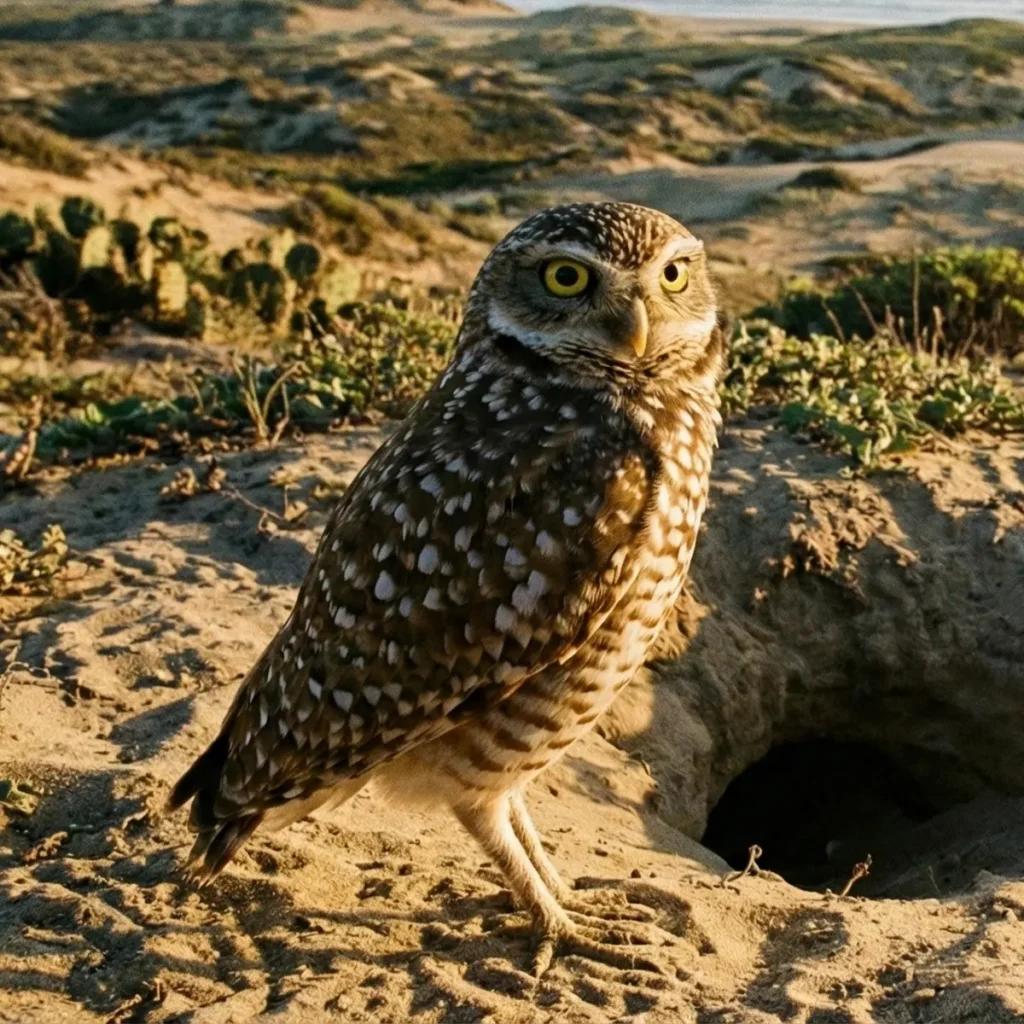
Returning to the coast, where the desert meets the Pacific, we find the Burrowing Owl (Athene cunicularia). While not as colorful as the Macaw, this owl possesses a charm and charisma that captivates the observant traveler.
Coastal Chic
The Peruvian coast is home to ancient civilizations and modern luxury resorts in Paracas and Lima. Here, the Burrowing Owl stands guard. Unlike their nocturnal cousins, these owls are active during the day. They can often be seen perched on the adobe walls of ancient ruins or on the manicured grounds of private haciendas.
With their piercing yellow eyes and comical expressions, they are the photographers’ delight. They nest underground, emerging to bob their heads at passersby. They are a reminder that Peruvian birds have adapted to every niche of this diverse country, from the rainforest canopy to the arid sands of the coast.
The Intersection of Luxury and Conservation
The privilege of witnessing these seven wonders comes with a responsibility. The high-end travel industry in Peru is the vanguard of conservation. By valuing these animals alive in their natural habitats, luxury tourism provides a potent economic alternative to extraction and deforestation.
When you book a trip focused on Peruvian birds, you are essentially hiring local guardians. The guides, the lodge staff, and the community members become stakeholders in the preservation of biodiversity. Your journey helps fund research, protect vast tracts of land, and educate the next generation about the value of their natural heritage.
Curating Your Experience
To truly appreciate the majesty of Peruvian birds, the details matter.
- Optics: Invest in top-tier binoculars (Swarovski or Zeiss) to fully appreciate the iridescent feathers of a hummingbird or the texture of a Condor’s ruff.
- Guides: Demand specialist birding guides. These experts can identify a species by a single note of its call and know exactly where the elusive species hide.
- Timing: The “magic hour” at dawn is non-negotiable. However, in a luxury setting, this involves freshly brewed Peruvian coffee and a warm blanket as you wait for the forest to wake up.
The Global Significance of Peruvian Avifauna
Why does the world look to Peru? Because it is an evolutionary laboratory. The density of species here is staggering. A single lodge in Madre de Dios may host more bird species than entire European countries.
For the collector of experiences, ticking off these seven Peruvian birds is a prestigious achievement. It signifies a journey that has covered the breadth of a continent’s geography—from the Humboldt Current to the Amazon Basin. It is a comprehensive tour of Earth’s biological capabilities.
Furthermore, the photographic opportunities are world-class. Whether you are an amateur with a passion for aesthetics or a serious photographer, the lighting and the subjects in Peru are unmatched. The vivid reds of the Cock-of-the-rock, the deep blues of the Tanagers, and the stark whites of the Egrets create a visual portfolio that is the envy of any traveler.
Conclusion: An Invitation to the Skies
Peru is a destination that engages all the senses, but it is the visual splendor of its avian life that lingers longest in the memory. The silent flight of the Condor, the raucous chatter of the Macaws, and the impossible agility of the Spatuletail—these are the moments that define a journey.
The Peruvian birds we have explored are more than just checklist items; they are the spirit of the landscape. They are the connection between the earth and the sky, the past and the present.
For the luxury traveler, Peru offers the rare opportunity to combine world-class hospitality with world-class nature. It is an invitation to slow down, to look up, and to marvel at the intricate beauty of life. The seven winged guardians are waiting. Your private expedition to the land of the Incas promises not just relaxation, but a profound reconnection with the wild, guided by the spectacular diversity of Peruvian birds.
BLOG HOME: